The Art of Layering Window Treatments
At ShadeZone Blinds we’re always ready to help you find the perfect window treatments for your needs and preferred aesthetic. Sometimes, this requires multiple layers of window coverings in order to achieve the greatest level of versatility and visual appeal. However, layering multiple different types of window treatments requires planning and artistic vision to ensure the additional investment pays off with a gorgeous and practical final product. Here is our guide to finding success in layered window treatments.
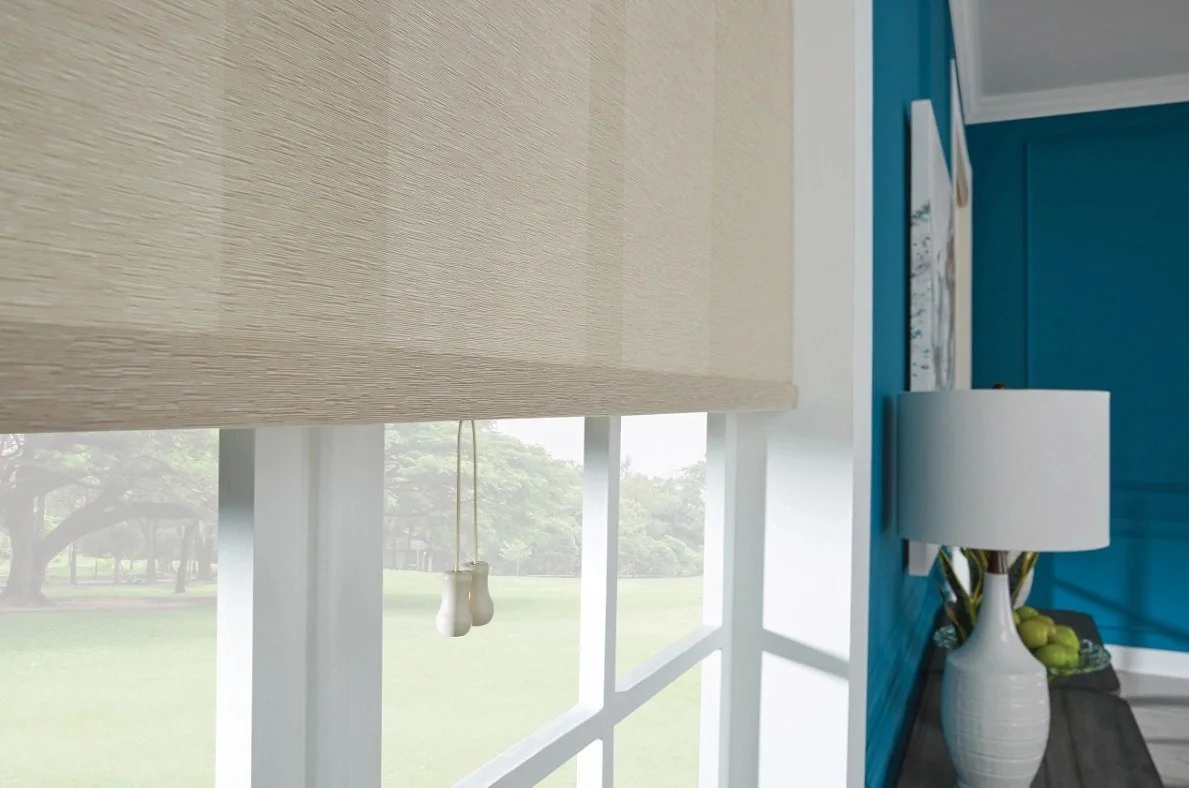
The first type of window treatment layering that we recommend is placing a roller or solar shade behind another window treatment. Blackout roller shades are a great addition to a window, as they can be paired with light filtering window treatments to provide full darkness and privacy when needed. Whether they’re used to complement a more decorative window covering, like a roman shade, or something as simple as a solar shade, roller shades are a practical and low maintenance second layer for your window coverings. For solar shades, dual shades, and horizontal sheers, layering a blackout roller shade behind is even easier, as they are available in combined cassettes that fit nicely on the inside of most window frames. Solar shades can serve a similar function to blackout rollers, but with the opacities of the two layers reversed. Solar shades can be layered behind more opaque window treatments, like blackout roman shades, to provide a sheer or light filtering option when needed.
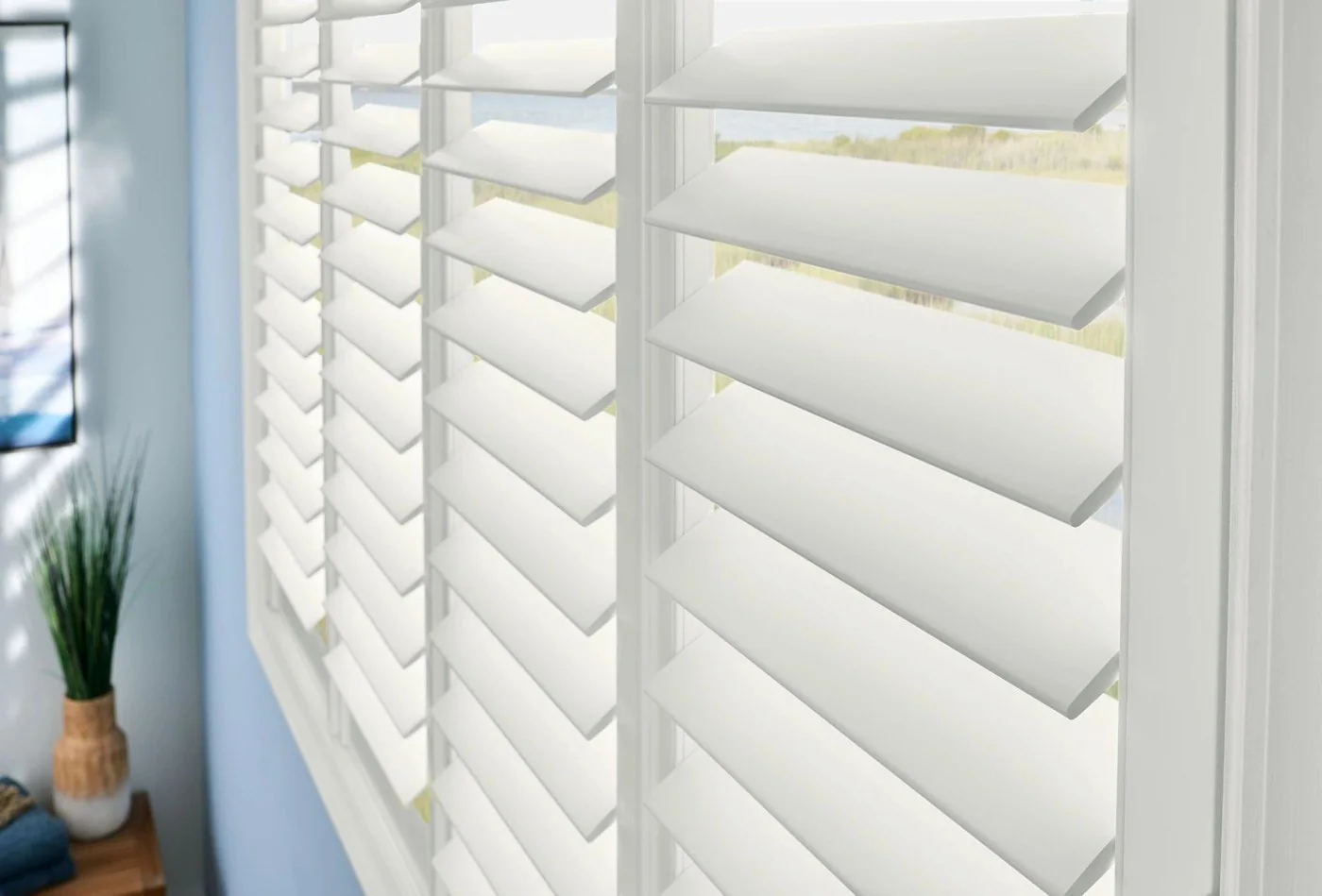
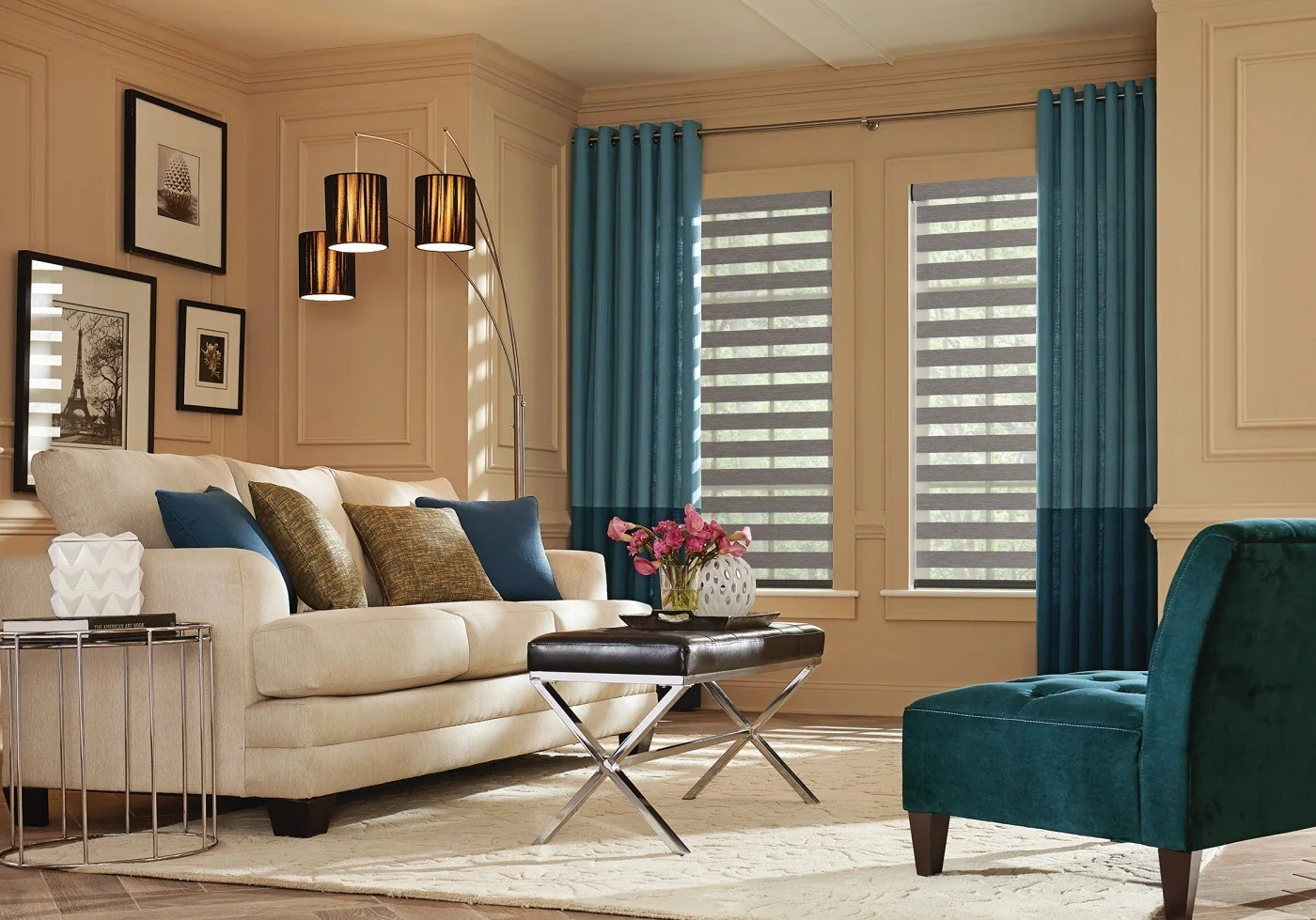
The second type of window treatment layering to consider is placing drapery in front of another window treatment. This arrangement has many potential benefits, though it does add significantly to the cost of an order. Firstly, the visual appeal of drapery is quite high, and is only enhanced through proper pairing with a number of different window treatment types, from roman shades, to natural shades, to blinds, to shutters. Secondly, drapery provides an additional layer of insulation against noise, light, heat, and cold. Since it is typically mounted on the outside of a window frame, it covers the gaps left by inside mount window treatments. Thirdly, drapery can be used as an opaque, light filtering, or sheer layer in combination with another window treatment. This provides greater versatility for managing the levels of light and privacy in your space throughout the day. Drapery can even be layered with itself in order to provide this effect.
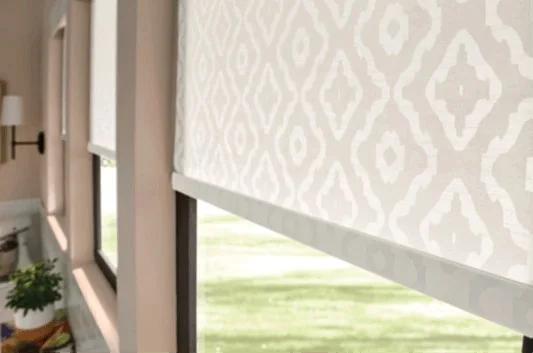
Choosing the right types of window treatments to layer is an important step in creating a successful set of layered window coverings, but it is not the only one. Colours and patterns also play an important role. It is typically best to avoid having multiple patterns that might clash when placed alongside one another, so we recommend leaving at least one layer as a solid colour. Choosing colours that complement one another is also key to the success of these window treatments, which is why seeing the samples for yourself before placing an order is so important. Finally, all colours and patterns on your window coverings should complement the spaces in which they are to be installed. While its understandable to focus on making the two layers work together, it’s important not to forget that they won’t be hanging in isolation when they are installed.
Layering window treatments can seem intimidating, but it only takes a little guidance to make the process simple, fun, and rewarding. Whether you decide to add a minimalistic shade or a gorgeous set of curtains as a second layer on your window coverings, our ShadeZone team will be happy to assist you in picking out the perfect combination for your space and needs.