Daytime Views, Evening Privacy: A Guide to Double Roller Shades
A bright living room can feel wonderfully open during the day, then suddenly exposed when the lights come on in the evening. If you enjoy your view but also want privacy and a darker room when you need it, double roller shades are worth considering.
For a street-facing home in Coquitlam, a Vancouver condo or a sunny Burnaby living room, the starting point is the same: decide what you want your windows to do at different times of day. One fabric does not have to do everything.
What are double roller shades?
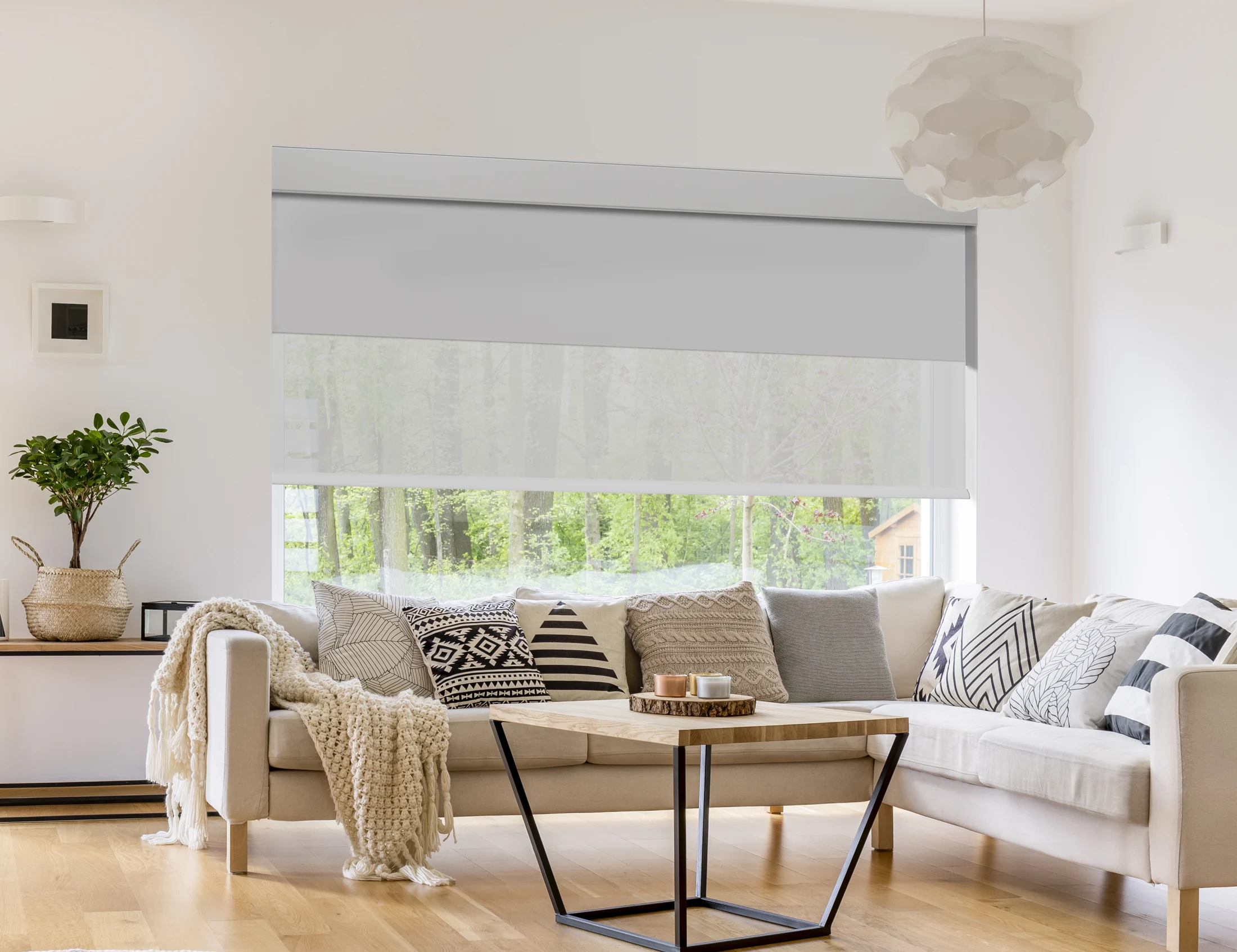
A double roller system combines two separate roller shades at the same window. A solar screen or light-filtering fabric handles daytime light, while a second, more opaque fabric provides greater privacy and room darkening. Each roller operates independently, so you can lower one, use both or raise them to enjoy the glass uncovered.
This is different from a zebra shade. Zebra shades adjust the alignment of sheer and solid bands within a layered fabric. A double roller gives you two individual fabrics, each chosen for a particular purpose. See our double roller shades to explore the available configurations.
Keep the view you enjoy during the day
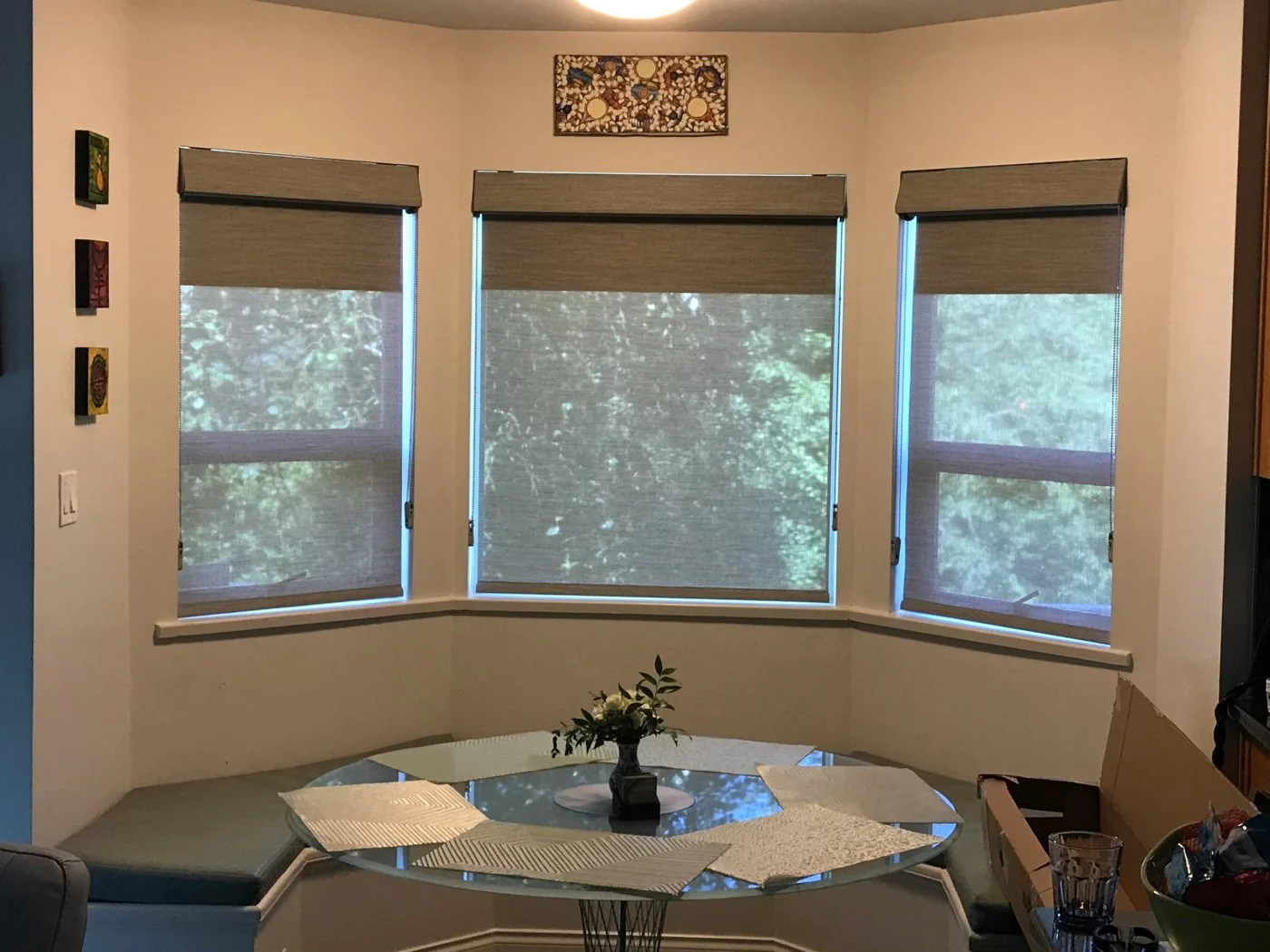
A solar screen fabric can soften glare while allowing a view through its weave. It can be useful beside a home-office desk, across a large living-room window or in a dining area where you want daylight without leaving the glass completely uncovered.
Compare the fabric against your own window. Openness, colour and the light on each side of the glass affect how much you can see through it. A sample that looks right against a showroom wall can feel different against a bright outdoor view. Our solar shades guide explains the choices to discuss before ordering.
Plan separately for privacy after dark
A solar screen is not a dependable nighttime privacy layer. When the room is lit and it is darker outside, people may be able to see into the space through the weave. A lower openness percentage does not turn a screen fabric into a blackout shade.
The second roller lets you close a more opaque fabric when privacy matters. For a bedroom or a window facing a neighbouring home, ask to compare fabrics specifically for evening privacy as well as appearance. Light-filtering fabrics vary, so check the selected material rather than relying on its colour alone.
Understand blackout fabric and room darkening
Blackout fabric is designed to block light through the material. The finished window can still admit light around the sides, top or bottom. Mounting position, fabric width, trim and the shape of the opening all matter.
For compatible installations, side channels help cover the vertical gaps beside the fabric. They can reduce stray light and improve privacy at the edges, which is useful for bedrooms and media rooms. They do not automatically eliminate every light gap, and they are not suitable for every window. We assess the opening before confirming a system.
If room darkening is your main priority, tell us how you use the room: sleeping during daylight, watching films or simply making evening lighting more comfortable. That helps us plan the whole installation, including any additional coverage needed around the window.
Check the fit before choosing controls
Two rollers need enough space to operate without rubbing against one another, the trim or the window handle. Recess depth and the way the window opens can affect whether an inside or outside mount is practical.
Motorized double rollers also need planning. Each shade needs its own motor for independent operation. With hardwired systems, confirm the required power feeds for both motors before wiring is completed. Rechargeable options need accessible charging arrangements. Explore our motorized blinds and integration options when planning your controls.
Bring these details to your consultation
A few observations make it easier to narrow the choices:
- Which rooms need daytime views, evening privacy or room darkening?
- When does direct sun create glare on seating, televisions or work surfaces?
- How close are neighbouring windows, paths or the street?
- Are there handles, deep trim or doors that could affect clearance?
- Would you prefer cordless operation or compatible motorized controls?
Photos of the complete window and approximate dimensions are helpful for an initial discussion. Our DIY measuring guide can help you record the opening, but the selected product and final measurements should be confirmed before an order is placed.
Find the pairing that suits your home
Choose the two fabrics together so their colours and textures complement the room. You can coordinate finishes across your home while giving a bedroom, living room and workspace different levels of coverage.
ShadeZone is Canadian owned and operated since 2007. Visit our Coquitlam showroom to compare samples, or send us your project details and photos. We help homeowners across the Tri-Cities, Vancouver, Burnaby and the surrounding Lower Mainland plan custom window coverings around everyday light and privacy.