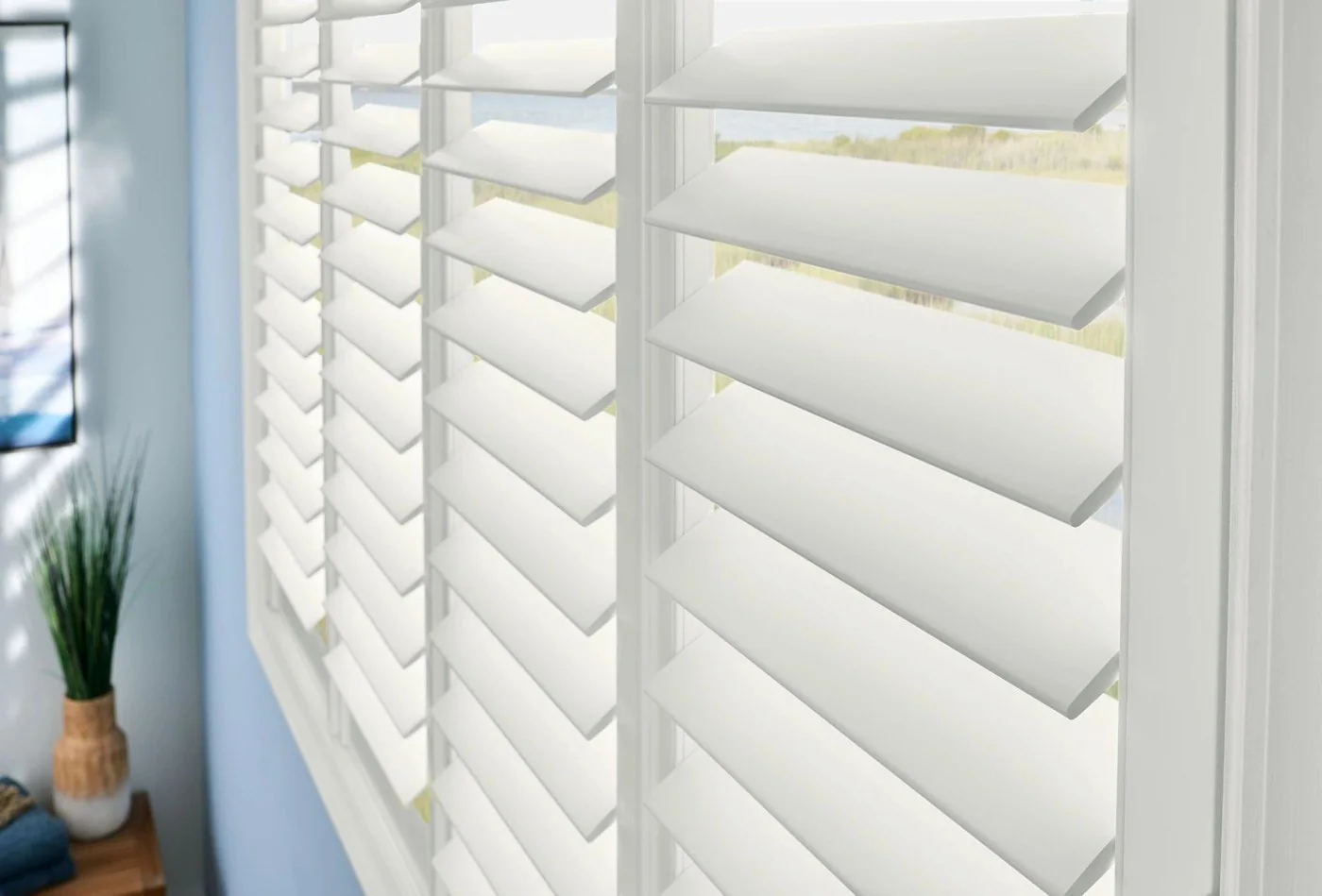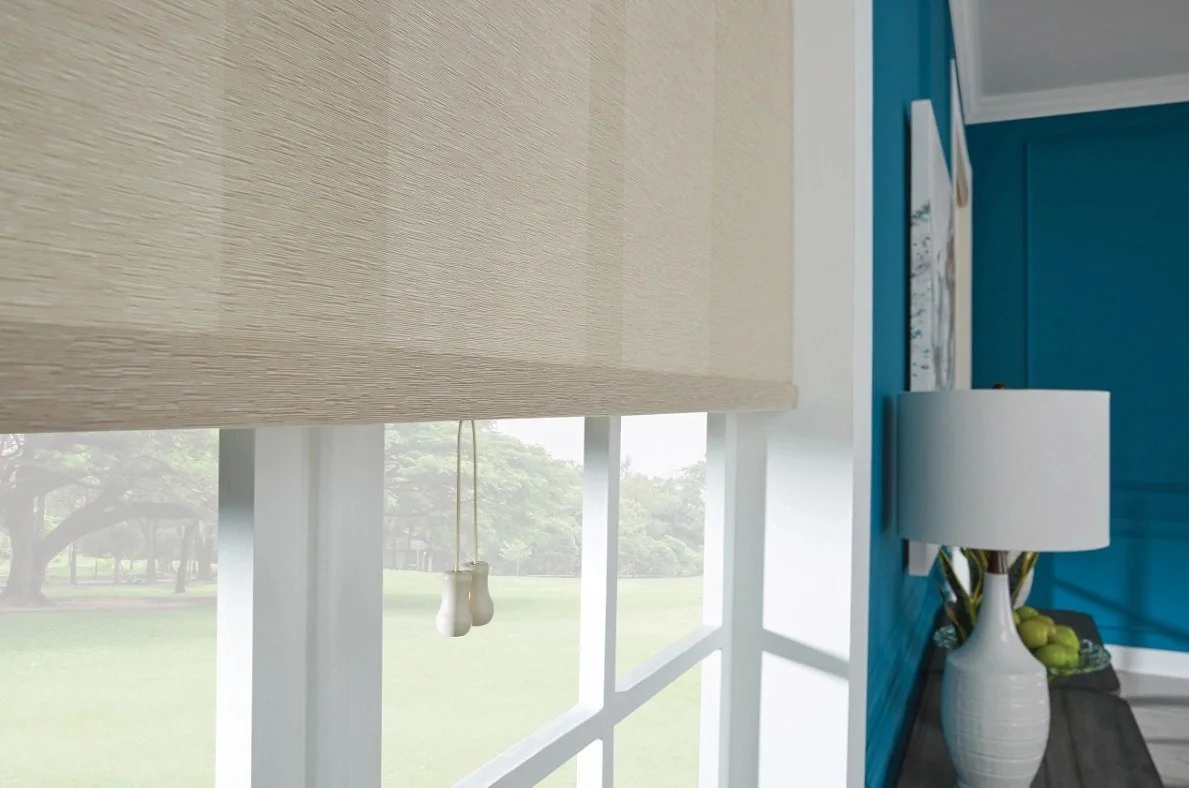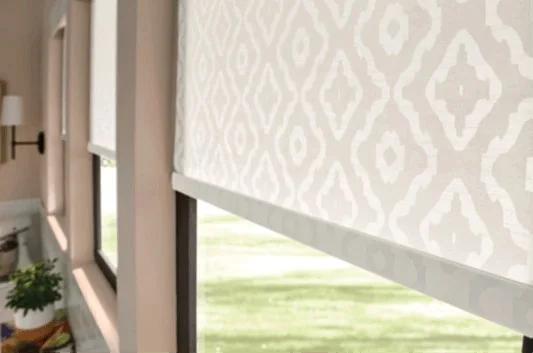
Choosing Between Horizontal Designs and Vertical Designs
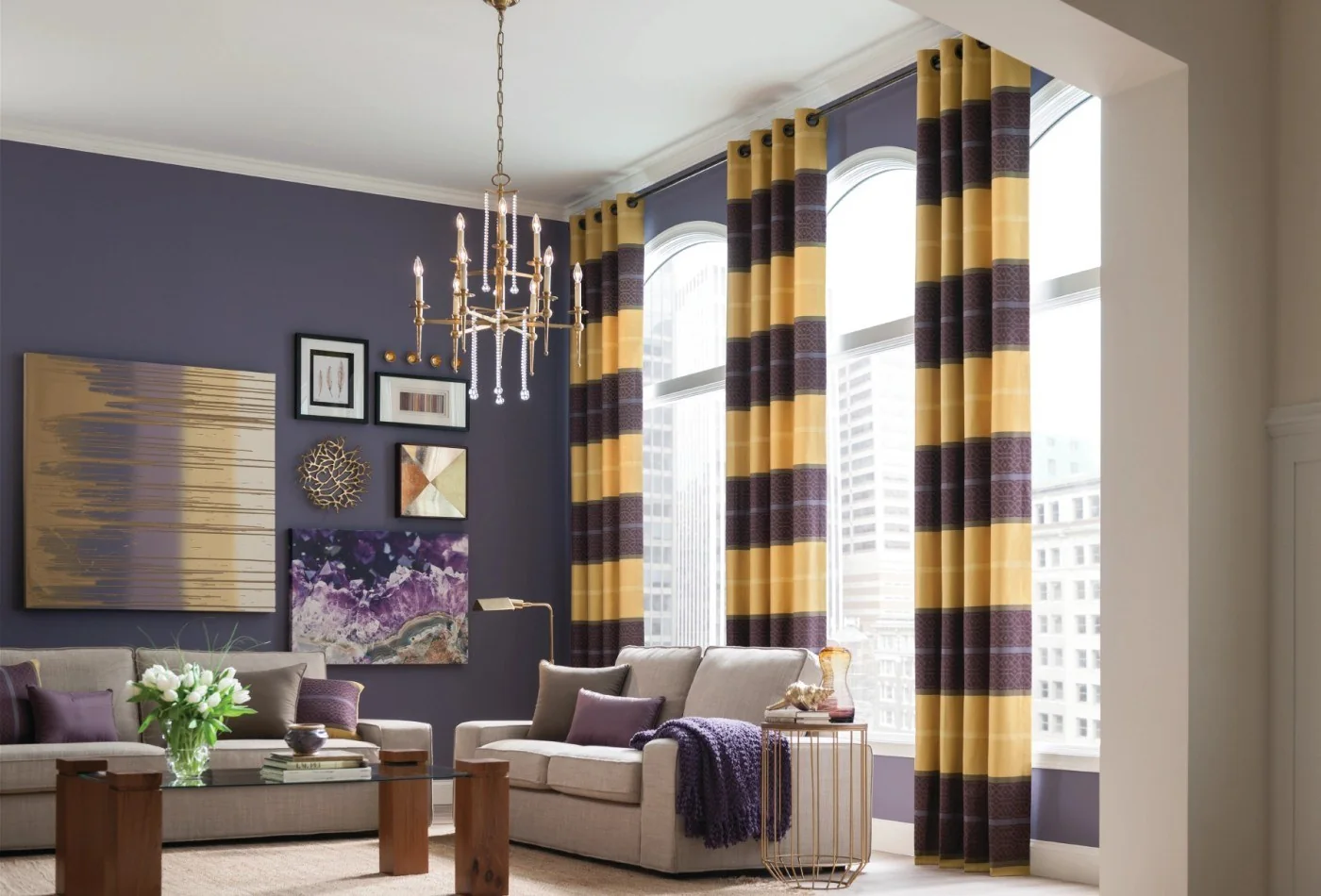
When selecting window treatments, those with horizontal designs and those with vertical designs can both work in any window space; however, there are some spaces that are better suited to one style or the other. Horizontal window coverings include horizontal blinds, dual shades, horizontal sheers, roman shades, and cellular shades, while vertical window coverings include vertical blinds, panel tracks, vertical cellular shades, and drapery. Roller shades are technically a horizontal window treatment design but are so versatile that they are also a good fit for most situations where a vertical window treatment design would usually be the preferable choice. This is because most roller shades do not reinforce their horizontal design with additional horizontal lines like most horizontal window treatment designs do.
Horizontal style window coverings are best for standard sized and smaller windows. Vertical designs can often look awkward or cramped in smaller windows, particularly those that are not particularly tall. Horizontal designs, on the other hand, typically have compositions that benefit more from a smaller scale. While this may seem like a limited selection of spaces for window treatments with horizontal designs to go, it actually encompasses most windows, as particularly wide or elongated windows are quite rare by comparison.
Vertically designed window treatments have more specific functions than horizontal ones. They are best suited to elongated windows or sliding doors, where they make your space feel bigger due to their tall and narrow forms. They are also great for exceptionally wide windows that exceed the maximum width of horizontal options. While you can have multiple horizontally designed window treatments directly beside one another, this does create gaps where light and vision can pass through unobstructed. Plus, horizontal designs often have horizontal bars on them, which can start to look strange when they are stretched wide enough. Window treatments with vertical designs are also the best option for creating a barrier to cut off one part of a room. When placed in this way, they operate like a wall in terms of providing privacy and darkness but can easily be slid to the side to allow people to pass through. Since adding an actual wall and door to a room is not always an option, vertical window coverings can fill this role quite well.
Hopefully this gives you a better idea of where each of these styles of window covering are most effective and aesthetically pleasing. However, you shouldn’t feel bound to follow these guidelines as rules, the choice of the best product for your space is up to you!