Wood Blinds vs Faux Wood Blinds
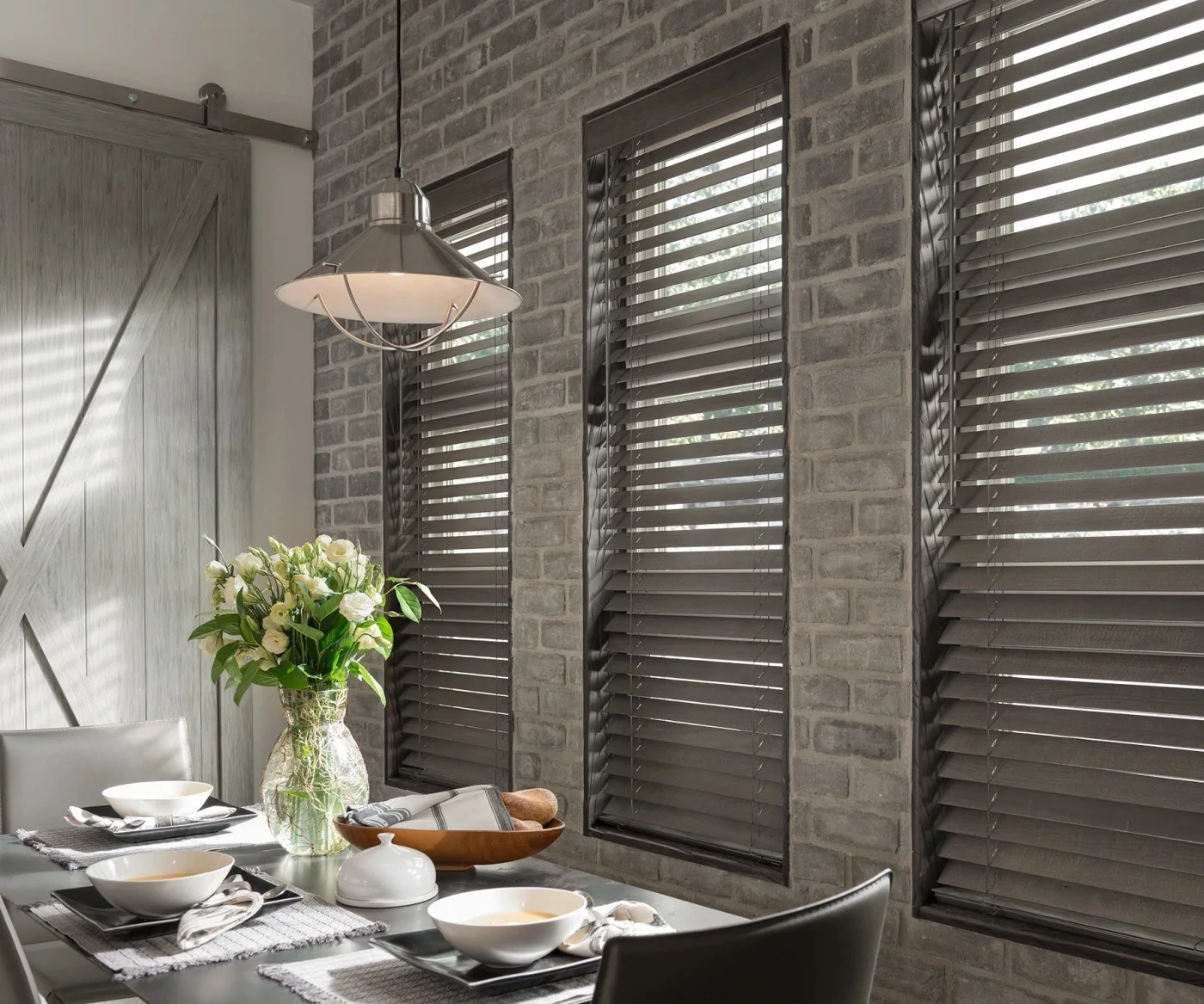
Faux wood blinds provide a great alternative to the classic design of wood blinds that consumers have loved for so many years.
Functions and Features
The design of wood blinds and faux wood blinds is essentially the same, with the only difference being the type of material used for the slats. Here, wood blinds mildly outperform faux wood blinds, as they provide superior insulation to their faux wood counterparts. Apart from that, nothing really separates the two materials in this category.
Visual Appeal
Visual appeal is yet another win for authentic wood blinds. While faux wood blinds do a great job of mimicking the look of genuine wood, nothing beats the real thing. Authentic wood is a warm and characterful material that will make your space feel cozy and welcoming.
Durability and Cleaning
Durability is where faux wood blinds start to come out ahead. Unlike wood, which can warp over time when exposed to high levels of moisture, the materials used in faux wood are moisture resistant, so you can install them in bathrooms, kitchens, and other high-moisture rooms with absolutely no worries. They require roughly the same level of effort to clean, though faux wood’s moisture resistance means that you can use water-based cleaning methods on them, which is less advisable for authentic wood products.
Affordability
Faux wood blinds are a more affordable alternative to authentic wood blinds, which is one of their major selling points.
Summary
Authentic wood blinds offer a high level of visual appeal, as well as superior insulative benefits to their faux wood counterparts. This makes them a highly attractive option; however, faux wood blinds can be a more practical option, as they provide improved durability in moist environments, and come at a more affordable price.