Cellular Shades vs Horizontal Sheers
Introduction
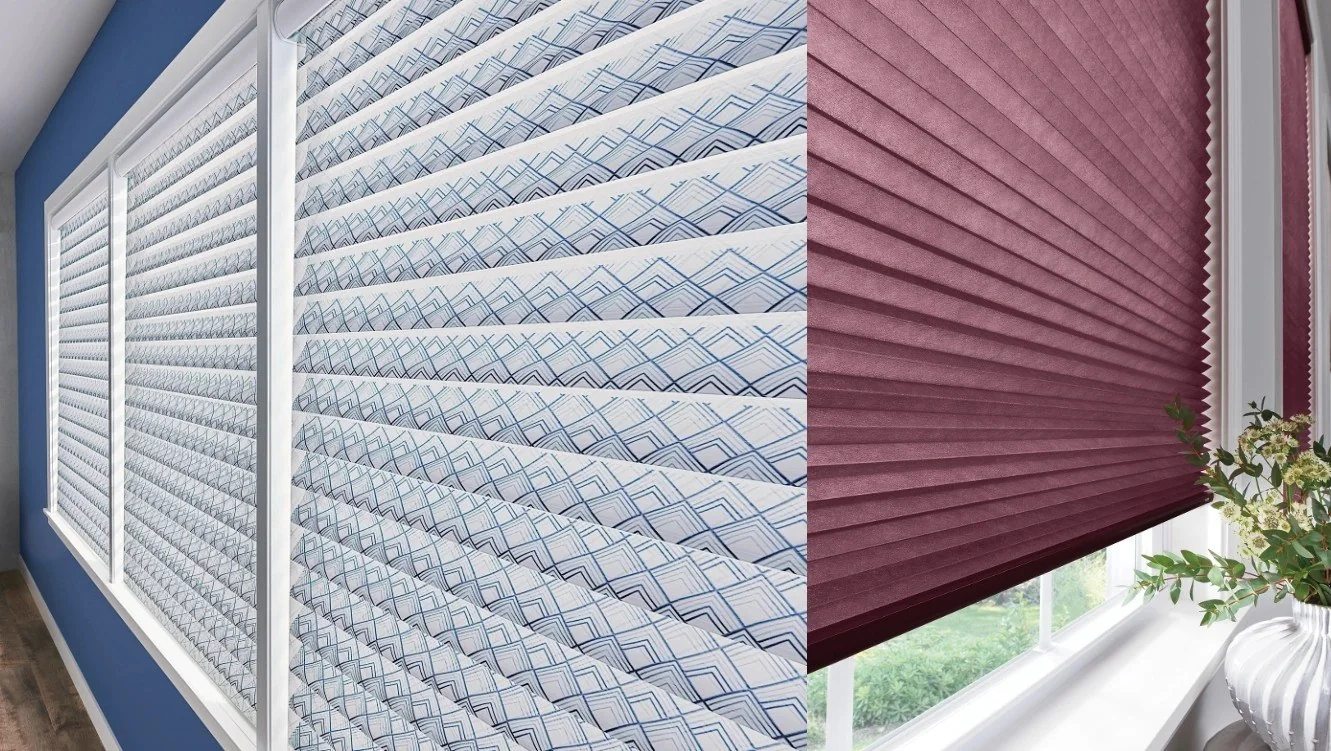
Cellular shades and horizontal sheers both buck the trend of simple, thin, and flat shades by incorporating tunnels of air into their designs in their own unique ways. Interestingly, this choice is made for entirely different reasons for each of the two styles of shade. While cellular shades and horizontal sheers may look similar in some ways, they offer very different benefits to one another. Here is our breakdown of those benefits and the disadvantages associated with each style, so you can decide which style might work for you.
Functions & Features
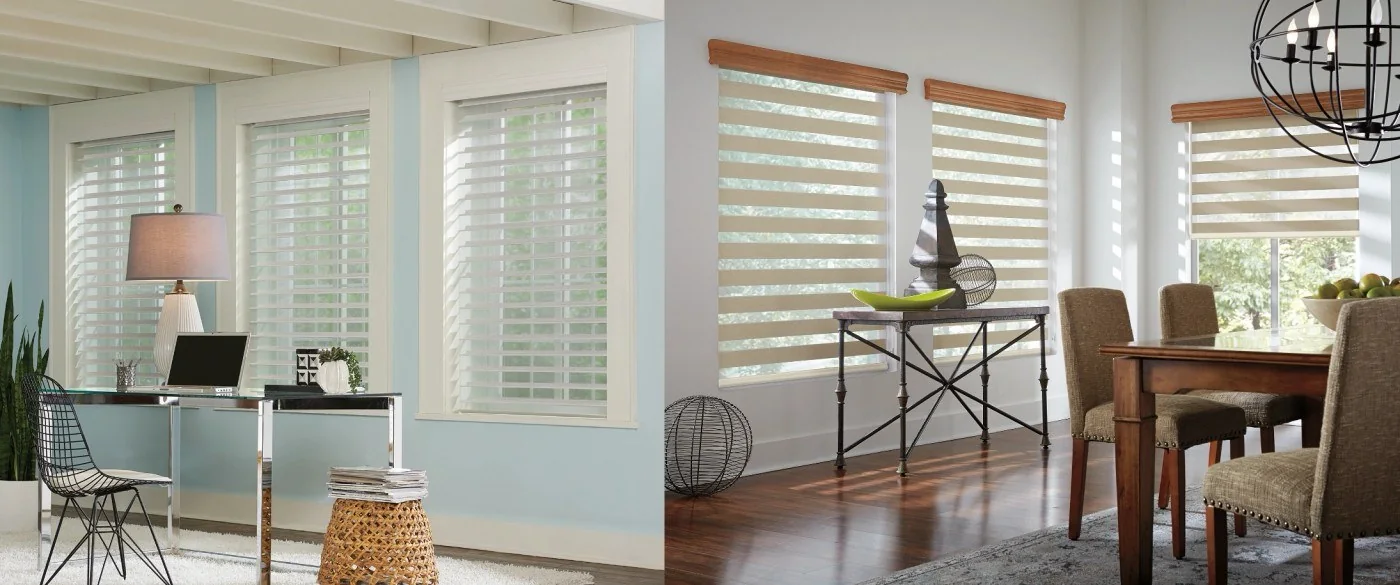
Cellular shades and horizontal sheers provide very different sets of benefits. Cellular shades are focused on providing the best level of insulation possible. The honey-comb style tubes of fabric form a great heat barrier that retains warmth during cold weather and keeps out the heat when it’s hot outside. This level of insulation also provides a great barrier against sound. Cellular shades can keep out most of the outside noise depending on the type of fabric chosen. Horizontal sheers do provide a decent level of insulation, but cellular shades are the clear winner in that category. Where horizontal sheers gain the advantage is in the greater level of flexibility they afford when it comes to light control and privacy. The fabric vanes of horizontal sheers operate similarly to the slats of horizontal blinds, allowing for you to tilt them to whatever angle you desire. The difference being that you also have the two sheer fabric sheets to provide glare and UV protection even when the slats are fully open. Horizontal sheers can also be raised up to provide an unobstructed view through your window, as can cellular shades. For greater flexibility in how you can use your shades, horizontal sheers are the preferred option.
Visual Appeal
In terms of visual appeal, horizontal sheers emerge as the clear winner. They are elegant, light, and airy, with a calm, undulating pattern. Truly one of the more beautiful window covering designs. Cellular shades, on the other hand, are typically considered to be more of a functional choice than an aesthetic one. While they do have a charm to them that some people really enjoy, the consensus would not place them on nearly the same level as horizontal sheers.
Durability & Cleaning
Cellular shades and horizontal sheers have roughly equivalent levels of durability. One downside of both products relative to simpler, flatter shades is that they are more likely to collect dust and debris over time, as well as being more difficult to clean when dust and debris has built up. When debris collects in the fabric tubes of cellular shades or horizontal sheers it can be time consuming to remove. Horizontal sheers are the worse offenders of the two, because they have larger openings into which debris can land, and debris is much more visible behind the sheer fabric of a horizontal sheer than it is behind the light filtering or room darkening fabric of a cellular shade. If ease of cleaning is an important factor for you, neither of these products would be advisable, but horizontal sheers would be one to particularly avoid.
Affordability
When it comes to price, there is a clear difference between the two products. Horizontal sheers are on the more luxury end of the window treatment spectrum, while cellular shades are in a more affordable price range.
Summary
Despite some surface level similarities, each of these window treatment types comes with its own distinct set of benefits. For cellular shades, the primary benefit is improved insulation that will make for a quieter and more comfortable environment. For horizontal sheers, it is greater flexibility in balancing privacy, views, and light control.