Horizontal Sheers vs Horizontal Blinds
Horizontal Sheers vs Horizontal Blinds
Long a staple of the window coverings industry, horizontal blinds are now fully back on the market after a brief stint of being a tilt-only product. With the playing field back to level again, it’s a good time to compare them with their new rival, horizontal sheers, to see if they’re still a good choice for a home or business. Horizontal sheers use fabric vanes, rather than wooden or aluminum slats, so they are light enough to be held up by two layers of sheer fabric instead of a cord system. This is a major benefit when you want unobstructed access to your window, but it is not the only difference between the two types of window coverings that you should consider before committing one. Here is our breakdown of the relative advantages and disadvantages of horizontal sheers and the various types of horizontal blinds still available to you.
Functions and Features
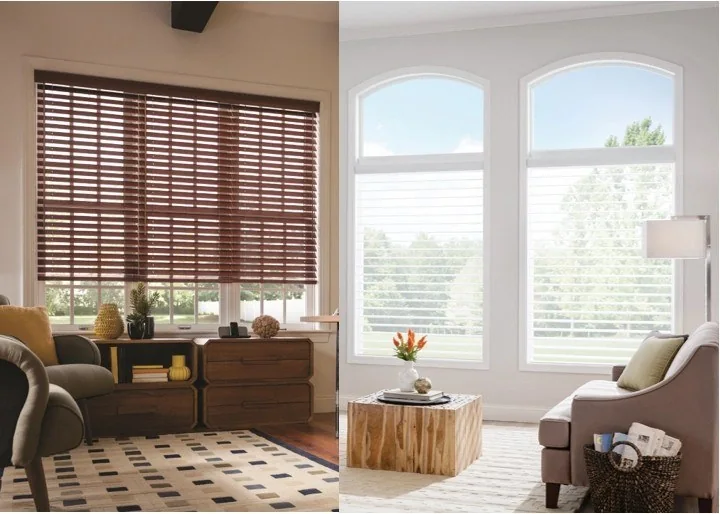
Horizontal sheers and horizontal blinds operate in very similar ways. Horizontal blinds use wood, faux wood, or aluminum slats, which can be tilted open or closed, as well as lifted into a stack at the top of the window frame. Horizontal sheers accomplish the same task through the use of horizontal fabric vanes suspended between two sheets of vertical, sheer fabric. The sheer fabric that holds up the vanes of horizontal sheers also helps to cut down on glare and harmful UV rays. This does come at the cost of making your view a little less clear, as it has to be filtered through the fabric; however, considering that the sheers can be lifted out of the way entirely, this is not really a problem. With their extra glare and UV protection, horizontal sheers come out slightly ahead in this category.
Visual Appeal
Judging the visual appeal of horizontal blinds as a whole is difficult, because the type of material used in their construction makes a big difference in how they appear. However, even looking at the most visually attractive type of horizontal blinds, which are authentic wood blinds, their warmth and charm still comes up short when compared to the elegance and weightlessness of horizontal sheers. The fabric vanes of horizontal sheers appear to float when the light hits the unit in the right way. It is truly one of the most beautiful window covering designs.
Durability and Cleaning
Any system that employs horizontal surfaces is going to require more cleaning than a system that uses vertical surfaces exclusively, so both systems require more cleaning and upkeep than something like a roller shade. Horizontal sheers get some protection from dust, as the sheer fabric forms a barrier that helps keep dust from getting in to access the horizontal vanes. This means that they require cleaning less often than horizonal blinds, but it also makes cleaning more difficult, as it is harder to access the vanes when they do need to be cleaned. In this category, your preference will depend on whether you would rather clean more often or with more difficulty to keep these window treatments free of dust.
Affordability
Horizontal sheers are more of a luxury item than horizontal blinds, making the blinds the more affordable option. While the type of material used in your blinds can have a significant effect on the final price, horizontal sheers are more expensive than even authentic wood blinds.
Summary
Horizontal sheers are the more luxury version of the classic faux wood design. They offer greater visual appeal and a slight improvement to functionality due to their improved glare and UV protection. While they are more difficult to clean, they require less constant maintenance than horizontal blinds, which are more prone to gathering dust. In exchange for these changes, there is a significant price increase over what standard, horizontal blinds would cost.